
Embossed Business Cards: Premium Texture for a Lasting First Impression
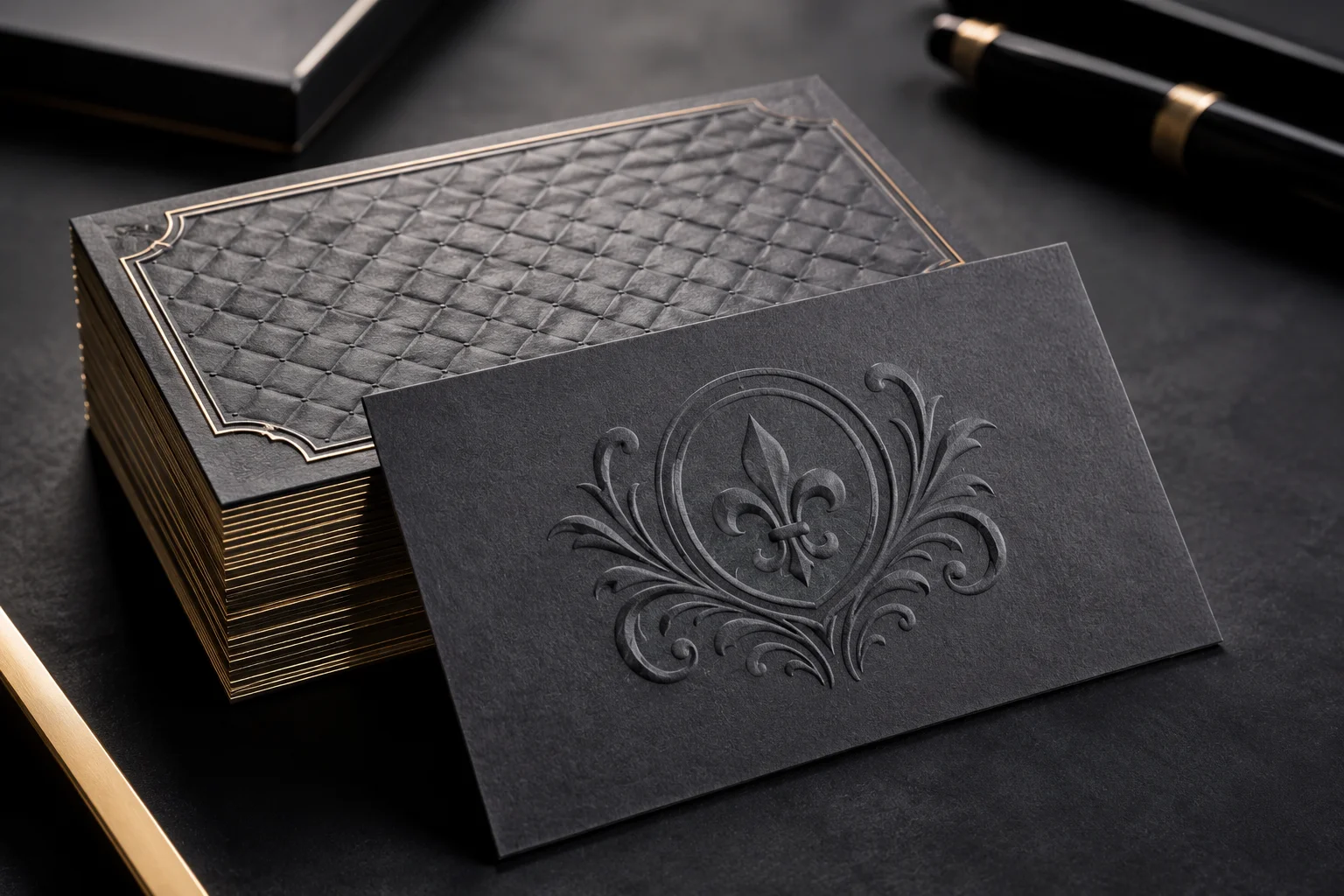
The initial contact you make with your potential clients can make a huge difference in the way they view your brand. In today’s day and age, colorful logos and visuals are the more popular choices among designers, but in the professional networking world, touch is still underutilized.
A tactile depth on business cards is a great way to communicate the quality of a product straight away. Your brand conveys a sense of quality before any word is read; with a memorable texture, you’re replacing generic, flat paper.
An embossed texture naturally will catch the eye of the recipient, and they will have to hold the card longer than most standard cards, which are remembered in an instant. This physical depth equates to instant perceived value and provides your business with a clear, strong competitive edge.
Why Texture Changes How People Experience Your Brand
Touch is the least utilised sense in branding. Brand choices are primarily made by the logo, colour and typography. The sense of touch that comes with holding a brand’s printed content is not often thought about with the same level of detail, and that’s a shame.
When someone runs a finger across a raised logo pressed into heavy card stock, they feel craftsmanship. The message it sends is that this brand notices things others overlook, and in a competitive market, that perception carries real weight.
What Embossing Is and Why Card Stock Matters
Embossing is a process that uses a metal die on paper to raise the fibres from the bottom of the paper. The raised element that is embossed on the card with no ink is the same colour as the card for a subtle, understated finish. Registered embossing combines texture and ink or foil to create something that’s not only tactile but also visually appealing.
The material used for making the cards and business cards sleeves is essential. Embossing is most effective on thick, uncoated paper that has sufficient depth to retain the embossed design. Embossed cards are almost always made on a heavyweight paper, as thinning or coating would break up the detail.
Where Embossing Makes the Most Impact
Logo Embossing: The Highest-Value Application
The most popular (and successful) use of embossing is on a raised logo. A 3-D image of your mark introduces a sense of confidence before the content on your card is even read. Clean, geometric logos emboss most crisply.
The detail and the thin lines may be lost along the way, particularly in smaller areas of the card. If your logo is complex, make a basic embossed version, as it will be clearer and will have a stronger tactile effect.
Text Embossing: Subtle, Personal, and Distinctive
Embossing a name or title creates a sense of personalisation that flat printing cannot achieve. Blind-embossed text on dark card stock is particularly effective; the raised letters catch light differently from different angles, giving the card a dynamic quality that shifts as it moves.
This is particularly effective for senior professionals and luxury industry companies where people’s personal brand is as strong as the company’s name. A name embossed on this card declares: ” This person is important to know. This card is important to keep.
Pairing Embossed Cards with the Right Presentation
It’s not just about the card. A high-quality embossed card given in a worn pocket is just a downgrade. Customized premium paper envelopes designed for card presentation reinforce the brand experience before the card is even seen.
Business card sleeves are used for everyday use to keep the embossed top surface of the business card safe from micro scratches and pressure marking that can occur on the embossed top of the business card in a wallet or bag over time. A card that arrives with a flattened emboss has already lost the impression it was designed to make.
Designing and Producing Embossed Cards That Deliver
What to Emboss and What to Leave Flat
The embossing and leaving flat process is the most important part of the embossing process. Embossing is powerful due to its selectivity. The best cards lift one or two parts of the logo, name, or border, and do not lift the rest. If all the surfaces are embossed, there is nothing that stands out.
Embossed business cards are best used in a restrained design. The raised element is the natural focal point because of the clean layout and the amount of white space. Competing finishes and cramped typography reduce the impact, and the card is too cramped to be elegant.
Getting the Production Right
Ask for physical proof before approving the full run. The depth of the raise, the crispness of the edges, and the interplay between embossing and other finishes (foiling, spot UV, or business card sleeves) should all be evaluated in person before placing a volume order.
Communicate with your designer about embossing as a consideration. For raised elements, artwork must be shown on separate layers, and for clear die, artwork must include specifications. Getting the file right before production avoids costly corrections and ensures the result matches what the technique is capable of.
FAQs
Can embossing be combined with other finishing techniques?
Yes, and some of the most interesting results are achieved when embossing is used with foil or spot UV. The tactile depth of gold foil over the embossed logo on dark card stock is enhanced by the metallic sheen that photographs and presents exceptionally well.
Is embossing appropriate for all industries?
Embossing may feel like a luxury option, but it isn’t limited to high-end finance and retail. It’s also widely used by architecture firms, law practices, creative agencies, and other senior professionals. The key is to align the overall card design with industry expectations and avoid overdoing it.
How should embossed cards be stored to protect the finish?
The best business card sleeves to use daily are business card sleeves or a rigid card case. Customised paper envelopes will safeguard the surface and make the card exchange a thoughtful brand moment, not a regular exchange.
Closing Thoughts
In the end, your business card speaks volumes about your professionalism. Investing in thoughtful texture transforms a routine exchange into a luxury experience. If you emboss and protect your card carefully and carefully choose the design, your card isn’t a temporary placeholder anymore; it can become a valuable asset that you can keep for years.
In a crowded marketplace where generic marketing materials are easily discarded, embracing tactile elements ensures you remain memorable. Your brand will make a lasting impact that can’t be denied and is extremely premium when you focus on physical proofing and expert production, bridging the gap between sight and touch, past the official introduction of your brand.

Rayan Al Mansoori is a premium print specialist at LuxuryBusinessCards.ae, focused on crafting statement-making corporate stationery for the UAE’s elite market. From luxury metal and textured paper cards to refined letterheads, envelopes, sleeves, and event invitations, he understands the fine details that define true sophistication. Through his blogs, Rayan shares valuable insights on materials, finishes, and design trends, helping professionals invest in stationery that reflects prestige, confidence, and lasting impact. Stay connected for some amazing tips and guides from Rayan to elevate your business cards.