 Luxury Business Cards AE



How Letterpress Business Cards Create a Luxury Look in the UAE
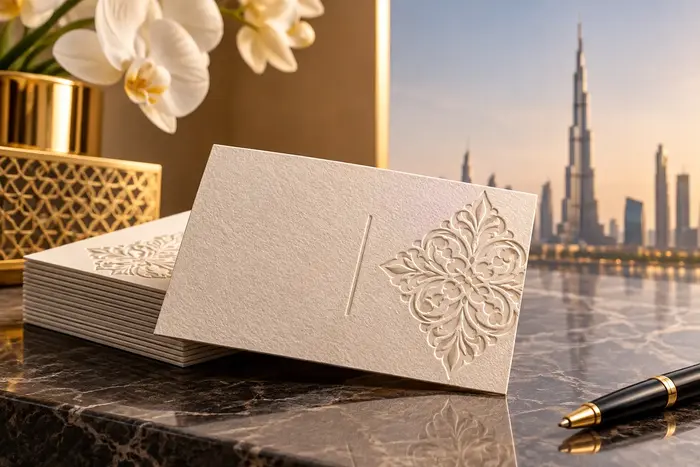
You have done everything possible to create an impressive reputation for your brand. Then why hand out a business card with an average look? For a CEO or businessperson, even small details can shape how people perceive your brand.
The right choice of material, stylish design, and clean finishing with some depth will help to highlight the essence of your company. But what can give your business card a genuinely luxurious look? Let’s discuss.
What Makes a Business Card Feel Truly Luxurious?
Luxury is not about using all the finishes on a single card. It depends on how the paper, design, typography, and finishing work together on your business card. Letterpress is a printing method where the text is pressed into the paper as opposed to placing the ink on top of the paper.
Beyond creating a visible impression on the card, it gives the card a luxurious feel when someone holds it. In today’s digital world, the tactile feel still matters because the need for physical cards is still there in business.
According to a recent 2025 Adobe Express survey of over 1,000 consumers and business owners, 70% felt exchanging business cards was a more personal experience than meeting someone on LinkedIn, compared to 45%.
Why Does Letterpress Work So Well for UAE Professionals?
The UAE has a very dynamic business environment where meetings and networking continue to play a big role in business transactions. According to the Dubai Chamber of Commerce, over 258,000 members were active at the close of the year 2024, and during the same year, 70,500 new companies were added.
That means your card may be competing for attention with countless other professionally designed letterpress business cards.
What Paper Should You Choose for Letterpress?
Paper can make or break the result. Letterpress generally works especially well with thick, softer stocks because the paper can accept a visible impression. UAE printers currently offer letterpress options ranging from around 300 GSM to 700 GSM, with 600 GSM cotton stock commonly promoted for deeper impressions.
For a luxury card, consider:
- Cotton stock: Soft, substantial and well suited to deep impressions.
- Heavyweight stock: Gives the card a firm, substantial feel.
- Uncoated paper: This will help retain the texture of the paper.
- Duplex or Triplex board: This is recommended if you need extra thickness or colour on the inside.
However, don’t select the thicker type just because it sounds more premium. The appropriate weight will depend on several factors.
How Should You Design a Luxury Letterpress Card?
A good letterpress design usually benefits from restraint. There is no need to occupy all spaces. You should keep your letterpress business card design simple by focusing on only the essential information such as:
- Your name
- Job title
- Company or brand name
- Phone number or email
- Website
- Relevant social or professional profile
Typography also deserves careful attention. Your name should be easy to identify, while your contact details should remain readable without competing with the logo.
Do CEO Business Cards Need to Look Different?
They often use higher quality materials and cleaner layouts to reflect a CEO’s authority and leadership. For CEO business cards, simplicity can actually communicate more authority than excessive decoration. A well-positioned name, carefully selected typeface, subtle logo, and substantial stock can create a confident impression without trying too hard.
Moreover, consider who will be receiving your card. If it is an investor, client or an executive whom you are meeting, you should ensure that the card projects professionalism on your part after the meeting and does not detract from it. The same rule applies to other professional sectors growing in the UAE.
The total number of registered companies in the DIFC is 6,920 in 2024, after registering 1,823 companies in the same year. With so many businesses and people involved in decision-making processes, good presentation is an important element of your brand image.
How to Carry the Same Luxury Feel Across Your Stationery?
Your business card shouldn’t look disconnected from the rest of your brand. The choice of the paper, colour scheme, typography, or the logo on your card may extend to your other stationery as well. This is where personalised envelopes printing can become part of the same visual system. You can carry the identity across:
- Branded envelopes
- Letterheads
- Corporate invitations
- Presentation folders
- Thank-you cards
- Client correspondence
Imagine handing over a beautifully crafted business card and later sending a proposal in a completely generic envelope. The two experiences don’t quite match.
When Is Letterpress Worth Choosing?
Letterpress isn’t the right choice for every business or every project. It makes sense when:
- Your brand has a premium or luxury positioning.
- You regularly meet clients in person.
- Tactile quality matters to your audience.
- Your design is relatively clean and focused.
- You want the card to feel distinctive without excessive decoration.
A different printing method may be more practical when you need complex photographic artwork, very large quantities, extremely fast production or a lower-cost solution. The important point is to choose the printing method around your brand and design rather than choosing a finish simply because it is labelled as luxury.
Readers Usually Ask
Are letterpress business cards expensive?
They generally cost more than basic business cards because the process, specialised equipment, premium stocks and finishing require additional work. The final price depends on paper, quantity, design and finishing choices.
What is the best paper for letterpress cards?
Thick cotton and quality uncoated stocks are popular choices because they can produce a clear, tactile impression. Your printer can recommend the most suitable stock based on the depth and detail of your design.
Can letterpress be combined with foil?
Yes. Letterpress and foil can work together when used selectively. A small metallic logo or detail can complement the pressed design without overwhelming it.
Can you use the same design and logo on envelopes and other documents?
Absolutely. Your logo, typefaces, and colours can be applied to envelopes, letterheads and other stationery.
To Conclude!
Your business card doesn’t have to be loud to be impactful. A great type of paper, a smart design and some attractive texture are enough to generate a more powerful impression than an elaborate design with many different effects.
For businesspeople in the UAE, especially those working with affluent clients and luxury brands, the letterpress method is a unique way to make your physical brand presence as strong as your overall brand. It is essential to define the brand first, then select appropriate paper, keep the focus on design and add extra effects only when necessary.